I read mysteries, and two of my favorite characters are Louise Penny’s Chief Inspector Armand Gamache and Donna Leon’s Commissariat Guido Brunetti. Both men solve mysteries by paying attention to what others overlook, listening carefully, asking questions, and patiently following every clue. I consider both men close literary friends.
Over the years, I have become an inspector of a different kind.
I investigate houses, and occasionally the architectural crimes committed against them.
The clues I follow are tax records and city directories, faded photographs and forgotten memories. I begin each case by reading the architecture itself. Every porch, every window, every roofline, every missing detail has something to say.
Like every good detective, I begin with one simple question.
What happened here?
A historian often begins with facts. A detective begins with clues.
I notice a porch that doesn’t quite match the rest of the house. I wonder why an address changed. I study old maps. My witnesses are photographs, deeds, floor plans, weathered wood, and the memories of people who once lived there.
I love what I do.
Every old house is a mystery. The architecture leaves clues. The records provide evidence. The people supply memories. My job is to gather them all until the house finally tells me its story.
One of the unsolved cases currently sitting on my desk is The Case of the Missing Doors.
At 430 South Church Street, every original interior door disappeared.
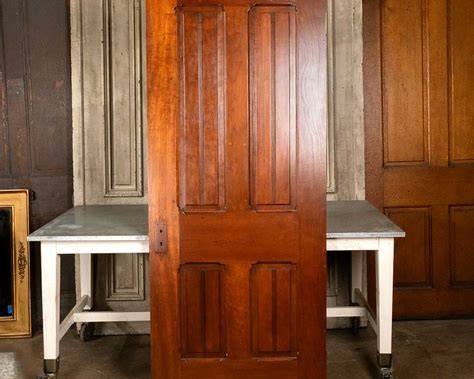
An early architectural report tells us they were original Victorian doors with four slightly raised vertical panels divided by a narrow horizontal rail. That single sentence is enough to tell us exactly what we are looking for.
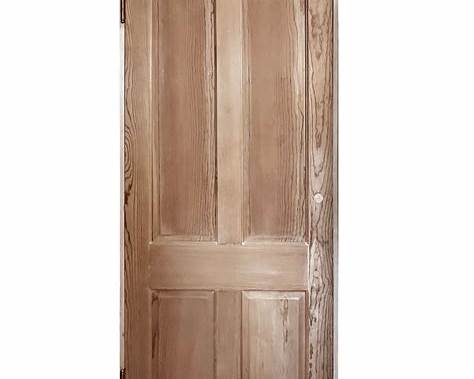
Today those missing doors would be surprisingly valuable.
A single original Victorian interior door in salvage condition commonly sells for $150 to $300.
A solid original door in good condition typically brings $300 to $600.
A professionally restored example may sell for $800 to more than $1,200.
A house the size of 430 South Church Street probably contained between twelve and eighteen original interior doors. Replacing them today could easily cost several thousand dollars, and perhaps well over $10,000, before a single piece of original hardware is added. Even the brass knobs, mortise locks, and hinges have become valuable pieces of architectural history.
Ironically, only a generation ago, many homeowners threw these doors into dumpsters so they could install modern hollow-core replacements. Today, preservationists search architectural salvage warehouses hoping to find the very doors that earlier generations discarded.
That is the nature of detective work.
Sometimes solving a mystery begins with finding the missing piece.
Sometimes it begins by simply knowing what that missing piece looked like.
Thanks to one sentence in an old report, I now know exactly what I am looking for.