Are You Thinking of Writing Your Story so the Grandchildren Will Know a Younger You? I Recommend Short Snippets Like This
The names Howard Baker and John Tower may mean little to a younger generation of Americans. Both were United States senators, Baker from Tennessee and Tower from Texas, whose political careers belonged to another era. But to me, they remain vivid figures from my early years of Republican politics, men whose stories captured my imagination and began a lifelong fascination with leadership.
What makes a Howard Baker memorable while someone else, perhaps equally accomplished, is forgotten? What is it about certain individuals that captures our attention, invites our admiration, and remains with us long after their political moment has passed?
I have spent time trying to understand the men and women whose leadership helped shape American history and the world I grew up in. These accomplished people formed many of my ideas. My Passwords project, a collection of personal reading notes and reflections gathered from the books that have accompanied my life, concentrates on the people and events that shaped America from Franklin Roosevelt’s era to the present day. Through these books, I have come to know figures such as George Marshall, Henry Kissinger, and James Baker, my heroes, discovering their personalities, their convictions, their accomplishments, and the circumstances that called them to public service.
I grew old while reading accounts of the Vietnam War. I don’t need to know anything more about President Lyndon Johnson. Yet I found myself fascinated with John Gilbert Winant, the American ambassador to Britain who followed Joseph Kennedy. What an interesting assortment of people have occupied my reading life.
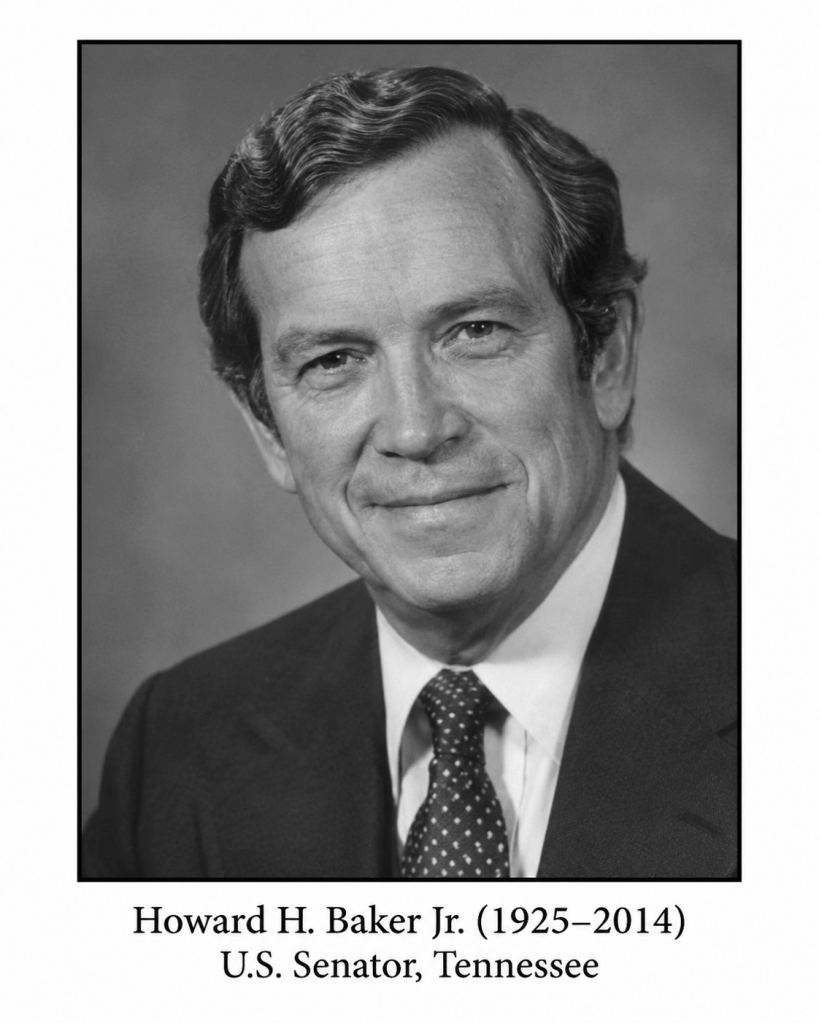
Howard Baker of Tennessee and John Tower of Texas were among the first Republicans to catch my attention. They belonged to a changing political world, when younger Republicans were challenging established leadership and beginning to make their presence felt in Washington.
In 1969, following the death of Senate Republican leader Everett Dirksen, Howard Baker challenged the party’s established leadership. A group of younger Republican senators supporting a new generation of leadership became known as the Young Turks.
Baker was an attractive man, a gentleman with a soft Southern accent and a manner I found particularly appealing. John Tower had a commanding presence that attracted my attention. Two very different men, both becoming part of my political education.
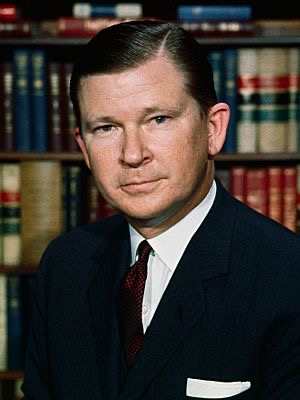
Senator John Tower
I remember obscure things like George Bush’s father’s name was Prescott Bush. Howard Baker’s wife, Joy, struggled with alcoholism. I remember small pieces of other people’s lives that somehow became part of my understanding of the people behind the public offices.
George H. W. Bush was making his own way in Washington during those years, serving in the House of Representatives from Texas. He was not one of the Senate Young Turks, but he belonged to that larger generation of Republicans whose careers I followed with growing interest.
In those early days of my political life, I was living in Kentucky.
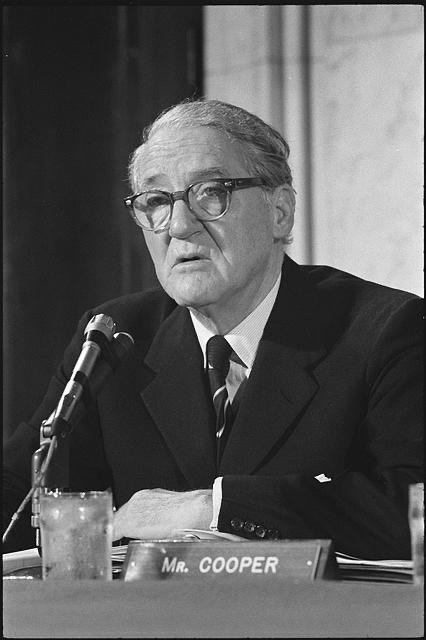
Senator John Sherman Cooper of Somerset was the senior senator, a greatly respected older gentleman whose kindly manner I remember with affection. Thruston Morton of Louisville was the junior senator, more cosmopolitan than the gentlemanly warmth I associated with Cooper.
I made my way through Young Republican politics, serving in several capacities. At one point I was State TAR Director(teenage Republicans.) Eventually I became the Republican county chairwoman in Daviess County. I was a young woman who knew the counties of Kentucky and how they voted, who understood the importance of organization, and who became thoroughly caught up in the art of campaigns.
Politics was not simply something I read about or watched on television. I was participating.
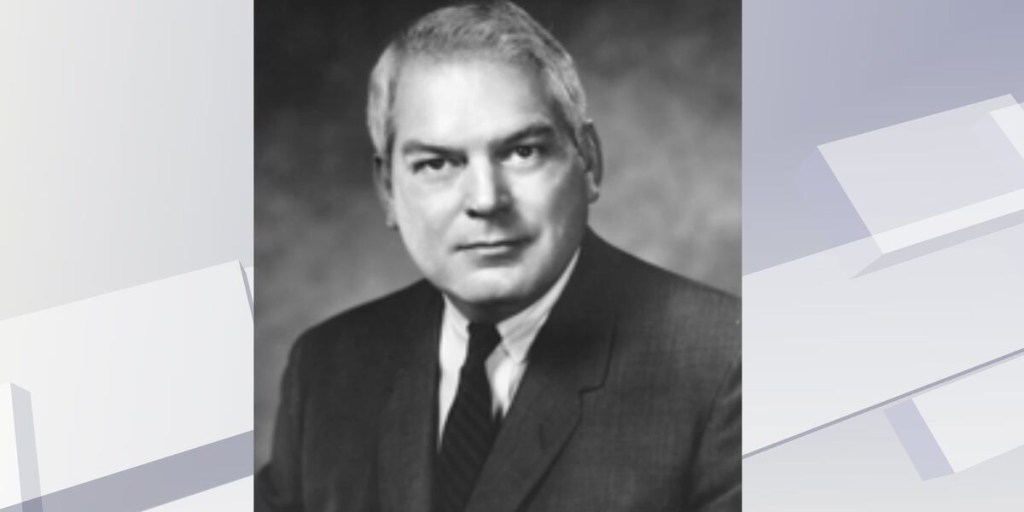
When Marlow Cook of Louisville ran for the United States Senate in 1968, I became involved in his campaign. He was elected to succeed Thruston Morton, and his victory became an important part of my own political endeavors.
It was during those Kentucky years that I came to know another young Republican whose name would eventually become one of the most familiar in American political life.
Remembering the Young Mitch McConnell
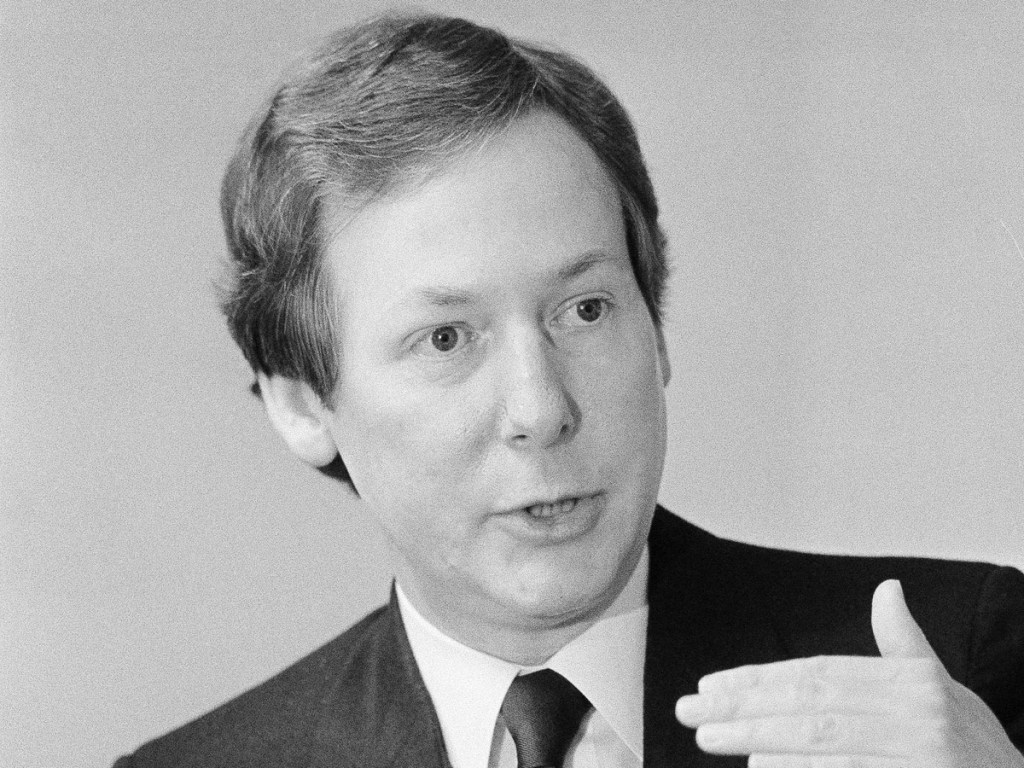
Among the people I came to know during my Young Republican years in Kentucky was a bright young lawyer named Mitch McConnell. He was active in Republican politics, and when Marlow Cook was elected to the United States Senate in 1968, Mitch went to Washington to work in his office as a legislative aide.
When Senator Cook was to deliver his maiden speech on the floor of the United States Senate, I flew to Washington to be there. It was Mitch who picked me up, took me on a little sightseeing tour of Washington, and accompanied me to hear the speech. What a wonderful memory that remains.
Who among us could have imagined the years ahead for Mitch or the extraordinary length of his eventual Senate career?
With some political research about these early political memories, I have discovered something that delights me.
In a 2009 tribute to Mitch McConnell on the floor of the United States Senate, Senator Lamar Alexander recalled that in 1969, Howard Baker of Tennessee encouraged him to become acquainted with a bright young man working for Kentucky’s newly elected Senator Marlow Cook.
That young man was Mitch McConnell.
Think of it. Howard Baker, one of the first Republican senators I came to admire, knew the young Mitch McConnell and thought enough of him to recommend him to Lamar Alexander. Marlow Cook had brought Mitch to Washington, never imagining, I suspect, the extraordinary political career that lay ahead.
I am grateful to have discovered this connection. It brings together people I admired, people I knew, and a period of my life I remember with affection.
I have been deeply saddened by the criticism Mitch has received as he has grown older and served longer. There are political decisions to question, positions to debate, and a long public record for history to examine. That is as it should be, but not in this remembrance.
I feel gratitude and pride for what has been Mitch McConnell’s long and honorable career of service to Kentucky and to our country.
Which prompts me to add a comment about growing older.
Some years ago, I heard a suggestion that when an elderly person enters the hospital, place a photograph of that person in younger years beside the bed, a reminder to the doctors, nurses, and caregivers that the frail patient before them was once young and vigorous, with a life full of promise and possibility.
The photograph is not meant to suggest that the younger person deserves better care, but to remind those attending the patient of the whole life represented in that hospital bed.
I find myself returning to that story when I think about Mitch McConnell.
Time has changed the young man I remember, as it changes us all. The public sees the older senator, sometimes hesitant, moving more slowly, carrying the weight of years and responsibility.
I see something else as well.
Growing older does not erase the person we once were. The eager, idealistic young lawyer who took me sightseeing in Washington before Marlow Cook’s maiden Senate speech is not simply someone Mitch McConnell used to be.
That young man is still part of the man he is today.
I wish those who see only the aging senator could see, just for a moment, the photograph I carry in my memory.
Mitch McConnell, standing in my kitchen in Anchorage, Kentucky, talking politics, with so much of his life still ahead of him.
I am glad I knew him then. And I have not forgotten him now.
A New Generation Catches My Attention
On Thursday evening, October 29, 2026, I watched Vice President J. D. Vance in a one-hour town hall with Jesse Watters on Fox News. The program, broadcast from Fort Worth, Texas, during Jesse Watters Primetime, gave me an opportunity to observe Vance in an extended conversation rather than delivering a prepared speech.
I had intended to watch the program, but I had not anticipated how strongly I would respond to the man himself.
There was humor, an ease in conversation, a quickness of mind, and an ability to communicate that I found remarkable. I found myself remembering those earlier years when certain political personalities first captured my imagination.