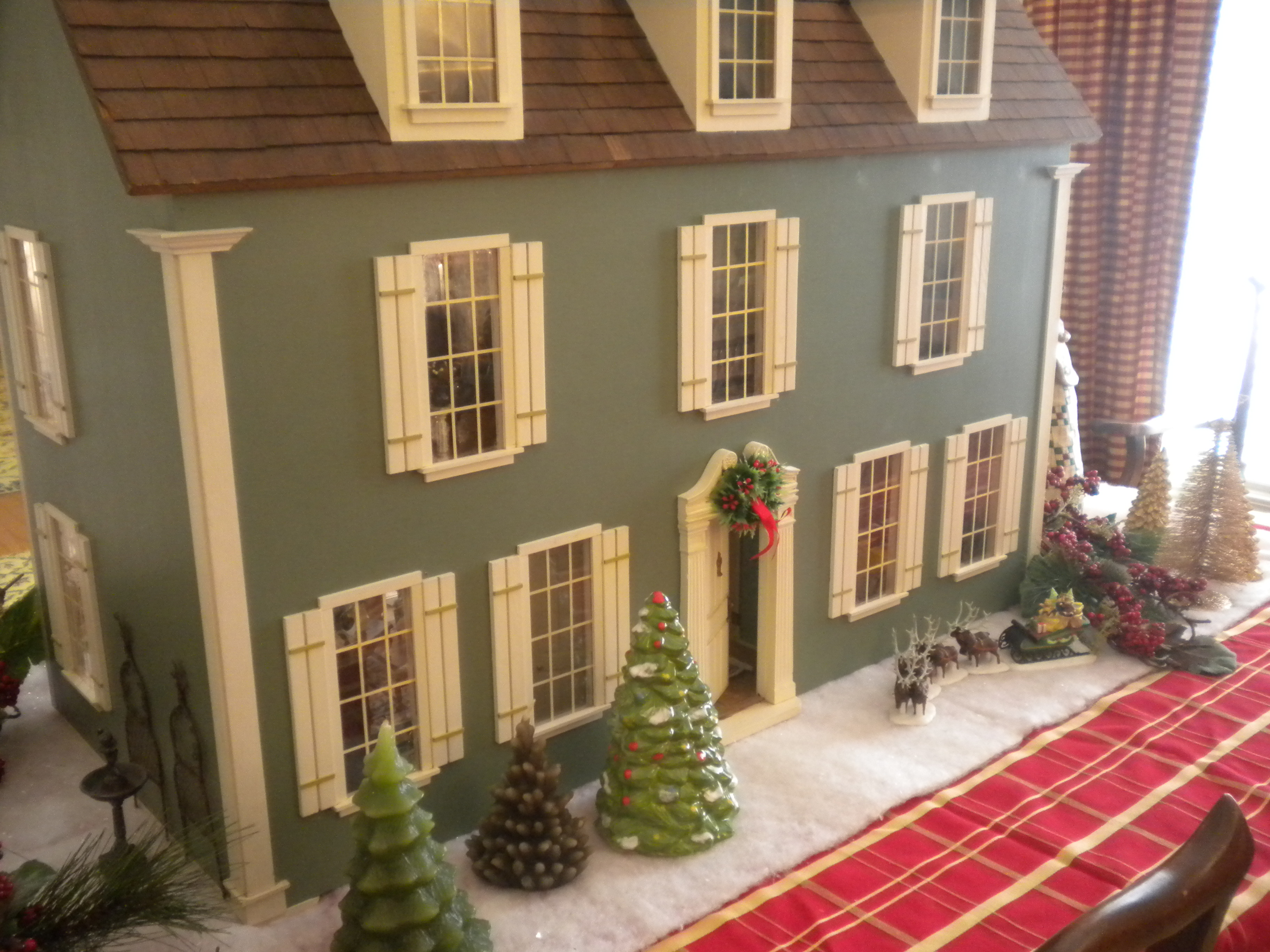
I have a doll house.
It sits safely under its roof, its rooms protected from the weather, its walls and floors in no danger from the next rainstorm.
I find myself looking at it differently these days.
Even my doll house has a roof on it.
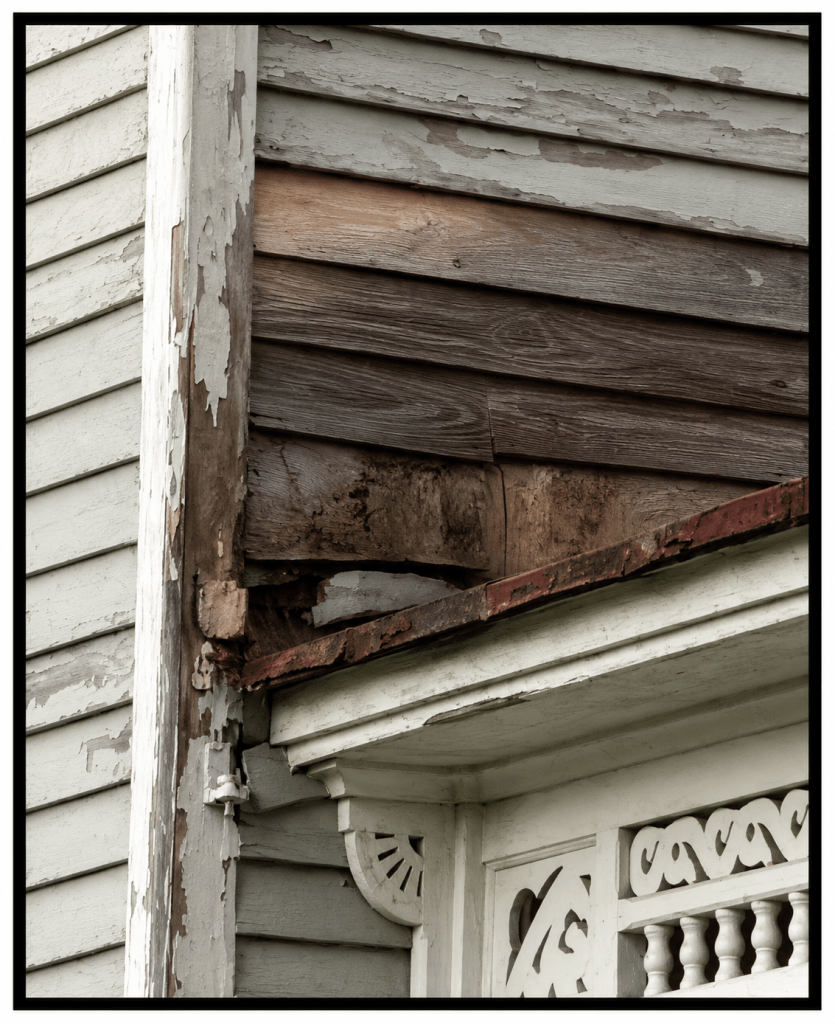
The Summerlin House at 430 South Church Street does too, of course, but not one that can continue doing the job a roof is supposed to do.
Those who are beginning to follow my efforts on behalf of this wonderful old house know that I believe the roof comes first.
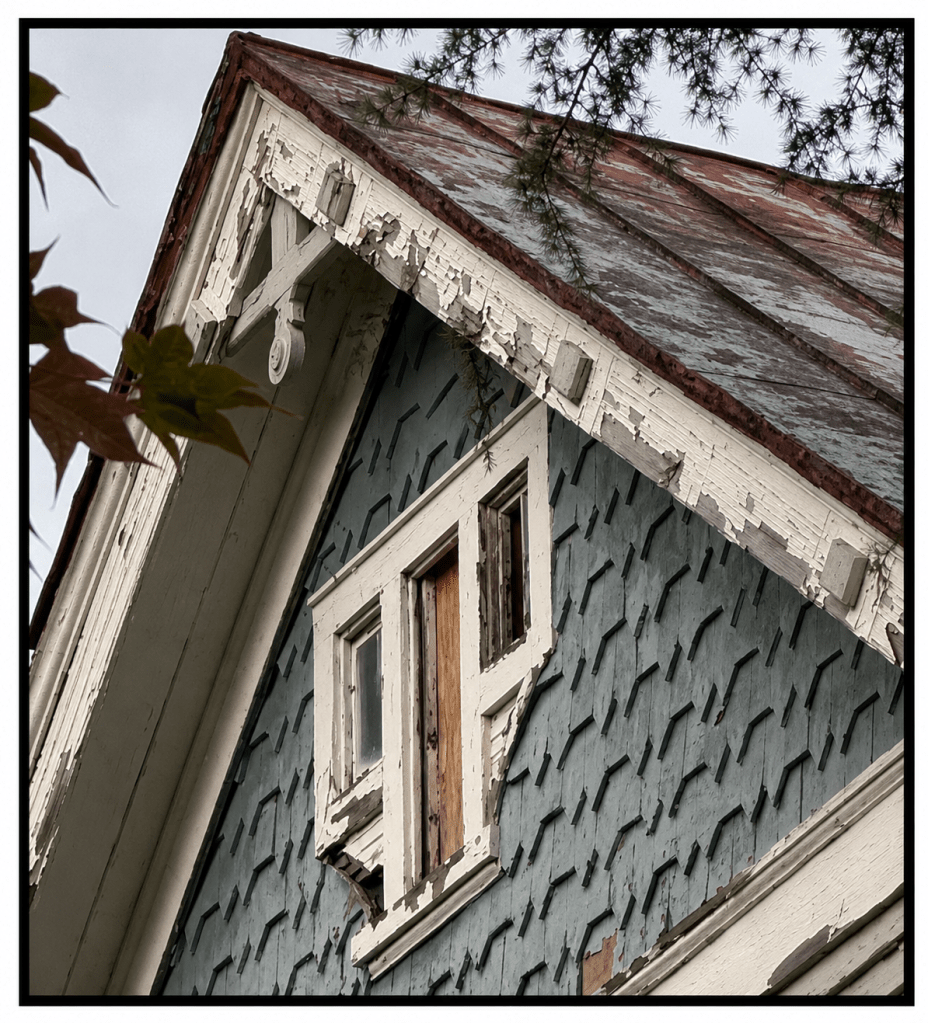
Before paint, before porches, before windows, before restoring missing architectural details, before dreams of what the Summerlin House might someday become, we have to keep the rain out.
Recently, I was given information that has helped me understand more clearly both the problem and the preservation process surrounding the roof.
The owner obtained a detailed assessment from Roofwerks, a reputable roofing company. The contractor considered whether the existing metal roof could be preserved by applying an elastomeric coating, rather than replacing it.
His professional conclusion was that coating is not the answer.
He explained that an Acrymac or GACO elastomeric coating system would be extremely expensive, with a cost similar to installing a new standing seam metal roof, while functioning essentially as a band aid. More importantly, he reported that the existing metal panels themselves are compromised.
A coating cannot correct that.
His recommendation is to remove the existing metal roof and the cedar shakes beneath it. With those layers removed, damaged purlins can be repaired, along with fascia and soffit compromised by moisture. Proper plywood sheathing can then create a code compliant roof deck, followed by waterproof underlayment, flashing, and a new standing seam metal roof.
When I read that explanation, I thought,
Isn’t this preservation too?
We sometimes think of preservation as keeping everything that is old simply because it is old.
It is more complicated than that.
Preservation also means knowing when something has deteriorated beyond its ability to protect what remains.
Preservation North Carolina has an important responsibility here. Its job is to make certain that an historic feature is not unnecessarily discarded and replaced with something that diminishes the architectural integrity of the house.
Its response to the proposed roof replacement asks for documentation, including photographs showing the condition of the existing historic standing seam roof, information about the proposed replacement material and color, and documentation demonstrating that the existing roof cannot reasonably be coated.
Preservation North Carolina has also specified what an acceptable replacement roof would require, a double lock standing seam system, narrow panels between twelve and sixteen inches wide, seams approximately one to one and a half inches high, concealed fasteners, and smooth panels intended to match the historic roof.
I understand those requirements.
In fact, I am grateful for them.
If we are going to replace an historic roof, we should replace it with one worthy of the house.
But the Summerlin House has caused me to think about another side of preservation.
Can the process of preservation sometimes stand in the way of the very thing preservation exists to accomplish?
That is not an accusation.
It is a question worth asking.
There must be room within preservation for urgency.