In Part One, we looked at how professionals examine an old building, foundation, walls, beams, rooflines, and materials, to determine whether life still remains in the structure.
But knowing a building can be saved is only the beginning.
The next question is who helps make that happen.
This is where professionals like Reid Thomas enter the story.
Thomas serves as a Restoration Specialist with the North Carolina State Historic Preservation Office, assisting communities across eastern North Carolina with the evaluation and rehabilitation of historic buildings.
His work involves advising property owners, architects, and developers on the condition of historic structures, methods of repair, preservation of original materials, and restoration projects seeking historic preservation tax credits.
When someone like Thomas walks through a building, he brings years of experience with historic construction techniques, materials, and architectural history.
He understands that original windows often deserve repair rather than replacement.
He recognizes the difference between structural damage and cosmetic deterioration.
He can identify when a building needs stabilization rather than drastic alteration.
That knowledge helps communities avoid losing buildings that can still serve a purpose.
Another fascinating part of preservation involves something practical that often makes restoration possible, historic preservation tax credits.
The federal government offers a twenty percent tax credit for the certified rehabilitation of income-producing historic buildings. North Carolina offers additional incentives that can make difficult projects financially realistic.
These credits are not automatic. Projects must meet standards that respect architectural character and preserve important historic materials.
Preservation is not only about saving buildings. It is about saving them the right way.
The deeper I explored this subject, the more I realized that preservation professionals see something different when they walk past an aging building.
Most of us notice peeling paint, cracked mortar, or boarded windows.
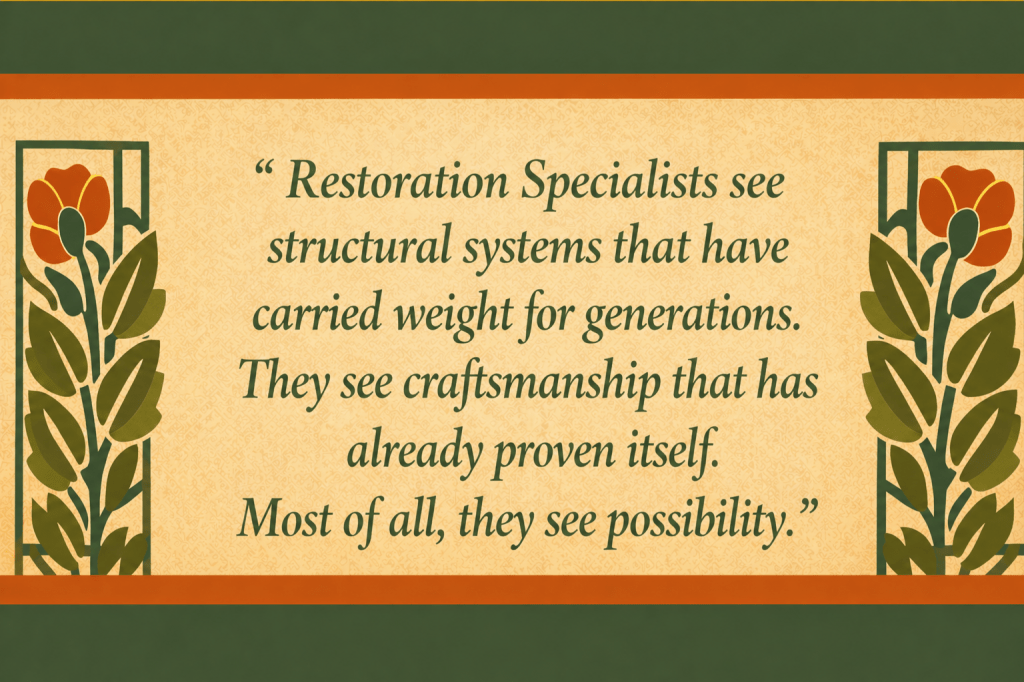
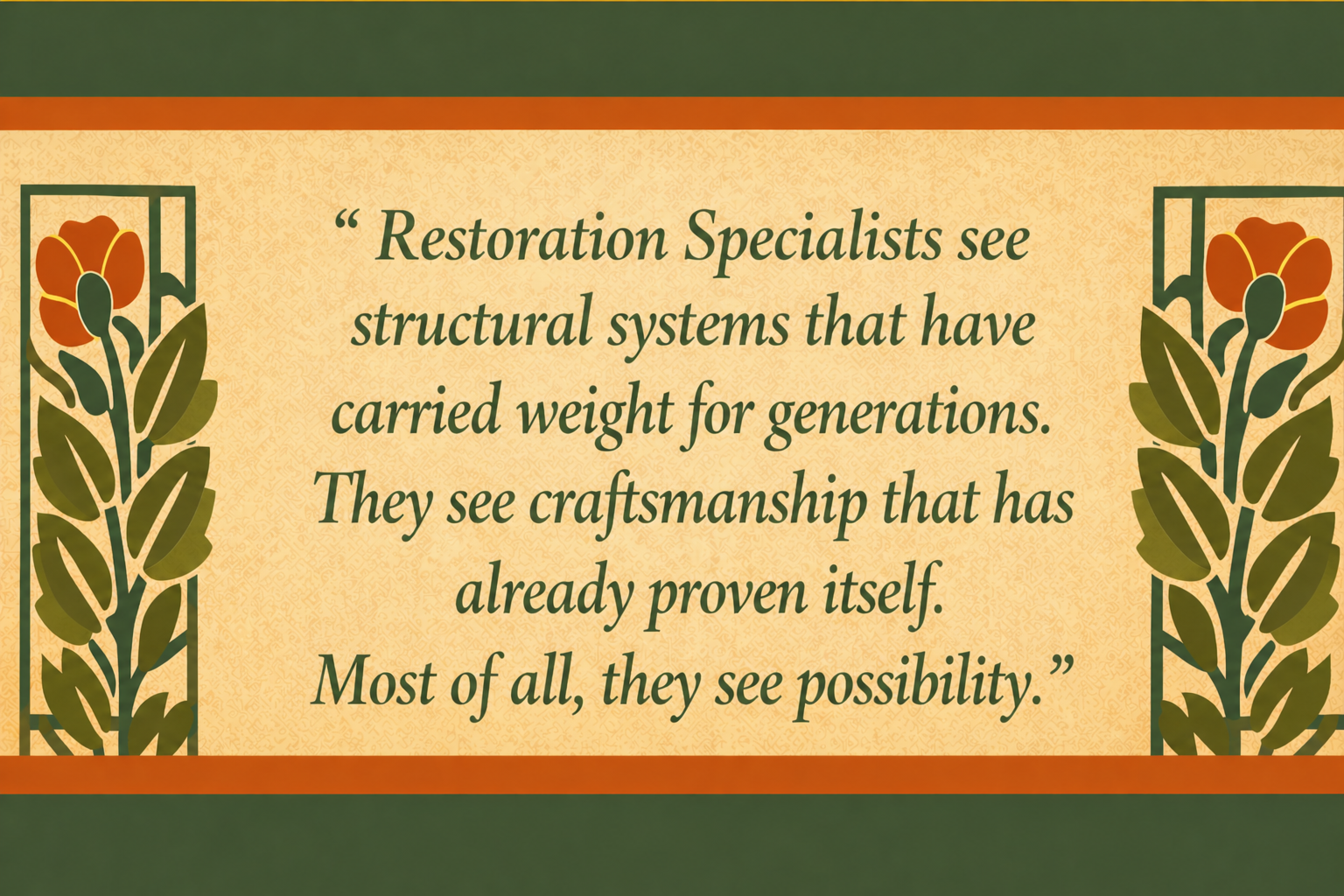
They see structural systems that have carried weight for generations. They see craftsmanship that has already proven itself. Most of all, they see possibility.
That matters in places like Rocky Mount.
Historic buildings are the physical memory of a town. They help give Main Street its identity.
When a building appears worn, the first reaction is sometimes to assume demolition is the only answer.
But preservation specialists remind us to ask one more question first.
Has anyone with the right expertise truly looked at it?
Because once that happens, the story of a building can change.
This post is dedicated to Reid Thomas, whose work across eastern North Carolina has helped communities understand the true potential of their historic buildings, and in many cases, helped save them.
Stepheny Forgue Houghtlin grew up in Evanston, IL. and is a graduate of the University of Kentucky. She is an author of two novels: The Greening of a Heart and Facing East. She lives, writes and gardens in NC. Visit her: Stephenyhoughtlin.com
View all posts by Stepheny Forgue Houghtlin