I have been thinking about a photograph I have never seen. It would show South Church Street in Rocky Mount when beautiful Victorian houses stood along what was once one of the city’s most desirable residential avenues. Imagine the front porches, decorative woodwork, tall windows, steep gables, and handsome rooflines of houses built by families who believed in Rocky Mount’s future.
Almost all of those houses have disappeared.
But one remains.
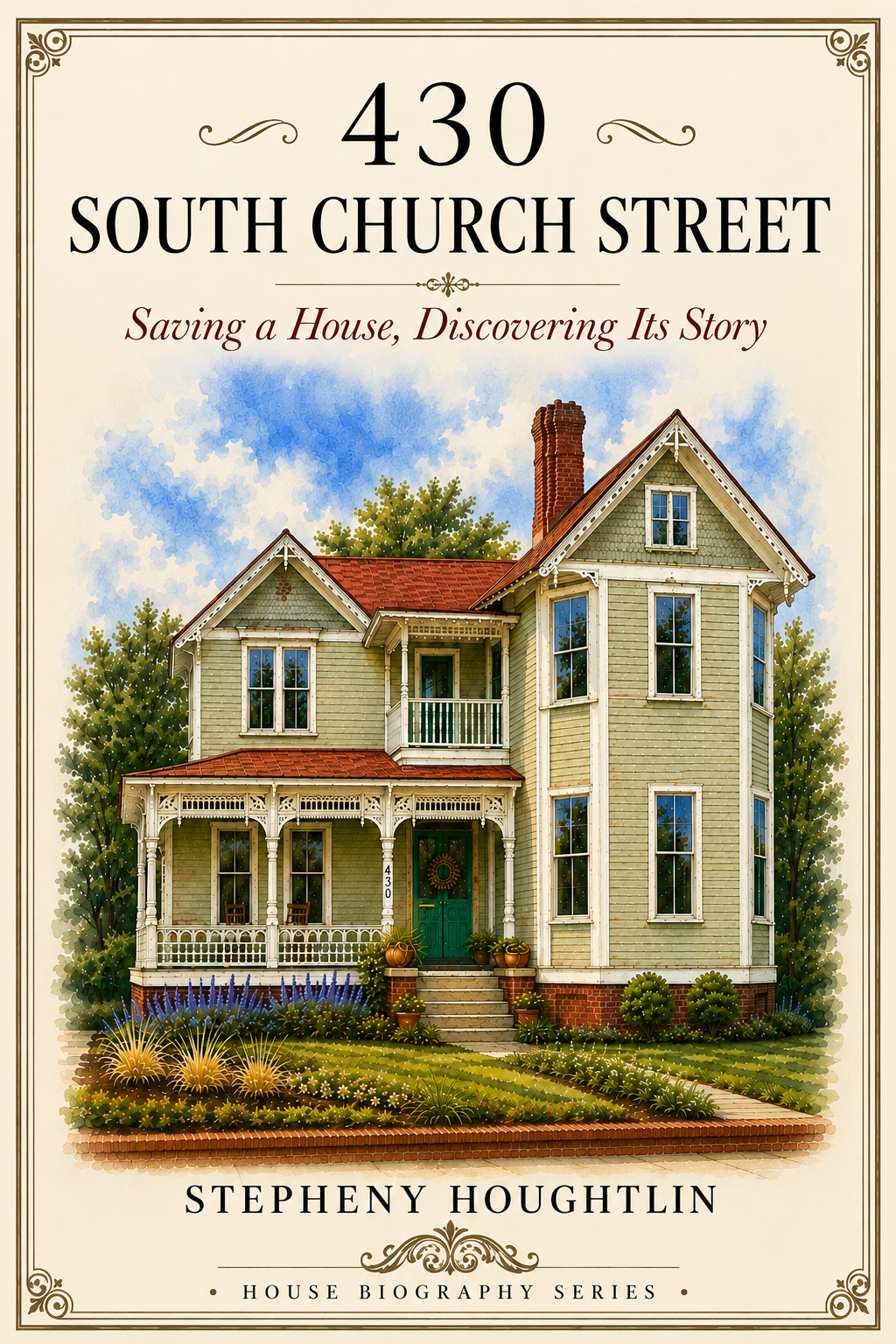
The Summerlin House at 430 South Church Street, built around 1895, stands as the last residential survivor of that remarkable period. Historical records identify it by its former address, 416 South Church Street.
According to the National Register of Historic Places documentation, Church Street was once an elite residential avenue, lined with the substantial homes of prominent Rocky Mount citizens. During the great growth of the 1890s, when the railroad and tobacco market were transforming the city, these houses reflected the prosperity and confidence of the people who built them.
Today, we must use our imaginations to picture that neighborhood. One by one, its houses disappeared, taking with them the architectural character of an entire street. The Summerlin House, with its Queen Anne Victorian details, ornamental porch, decorative shingles, and beautiful proportions, is all that remains of that residential world.
Its walls have sheltered more than 130 years of Rocky Mount life. Farmers, railroad employees, boarding-house guests, and the Summerlin family, whose name the house still bears, have all been part of its story. Inside are reminders of the craftsmen who built it, including Victorian mantels, decorative woodwork, and a handsome staircase.
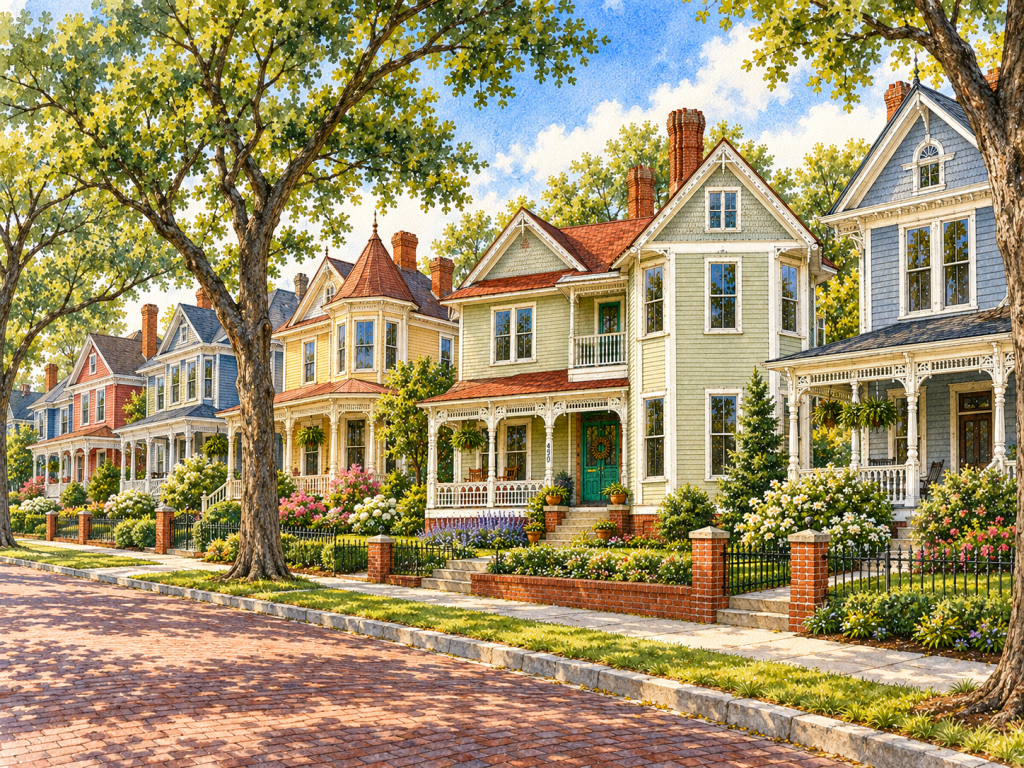
I have created an imagined view of Church Street as it might once have looked, with the Summerlin House standing among neighboring Victorian homes. It is not a historical photograph, but an invitation to see what has been lost and appreciate what we still have.