How Are Rocky Mount Voters Getting Their Information?

Sometimes, sitting here on my Main Street bench, I feel that I’m circling the same problem with no big fix in my pocket. With passion in my heart, I want to help. I want those who read the blog to begin to look at ‘the painting on the wall’ in a different way.

My daughter, Claire, puts up with me patiently, as I ply her with my Main Street concerns. She often offers an insight that is like a detour sign sending me off road with a new thought as a destination.

Complaining about low voter turnout in the car over Thanksgiving, Claire said, “The question is how are the people receiving their information?”

New City Councilman, Charles Roberson, Ward 3, had a social media campaign that was a Blue Ribbon effort. I read all of it on my own social media platforms. It was compelling, spelled out the work Charles has been doing when not running for the Council. It was heavy on action to judge his merit. Still the vote turnout was low.

Claire’s question lingers because it reaches deeper than one election. Isn’t it possible that how voters are getting their information partially explains why Rocky Mount is captured in a ‘tried to and couldn’t’ cycle.

We talk about reform, and about the headlines that discourage investment. These headlines wear down the business people who have planted their flag in faith and hope. They deserve the best climate possible, and City support that fosters growth across the board.

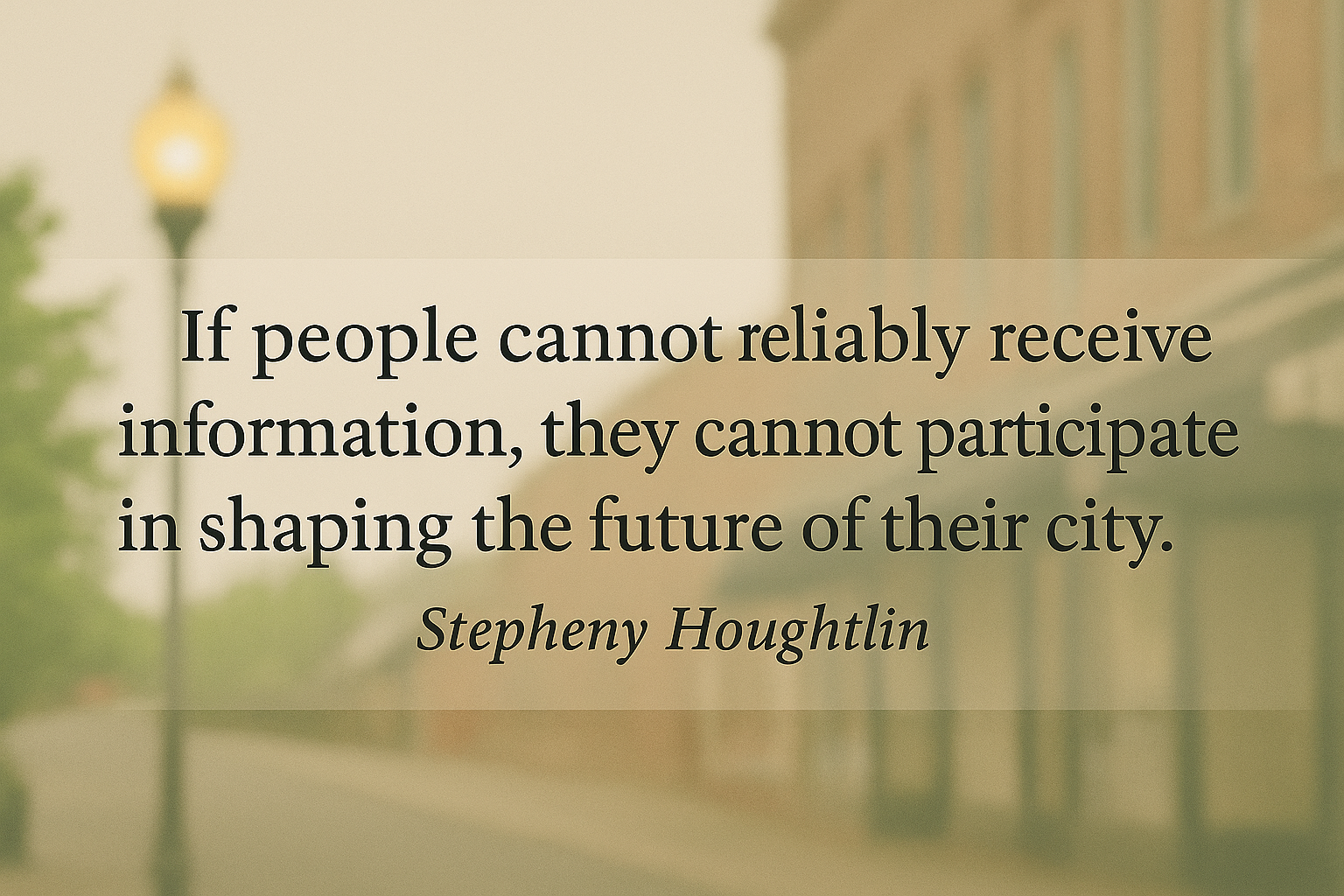
Claire pointed me toward the realization that access comes before turnout. If people cannot reliably receive information, they cannot participate in shaping the future of their city.

It is easy to forget that staying connected can cost a household seventy to one hundred fifty dollars a month. In neighborhoods where incomes are strained, that cost is not an afterthought. It is a dealbreaker.

Families who rely on smartphones instead of home service pay forty-five to seventy-five dollars per month for a single line, and unlimited data, necessary for Facebook, job applications, and streaming community meetings.

Across eastern North Carolina, broadband adoption rates lag behind the national average. In parts of Wards 1-4, household incomes fall below levels where families typically maintain home internet. The Wards that need change and support are filled with good people who deserve a life filled with possibilities.

When city announcements, candidate messages, or the kind of Main Street blog posts I offer, aren’t accessible, the notion that “nothing ever changes” is the reality.

Those without internet learn what they can through word of mouth, church conversations, text chains, and in that vacuum, intentional false information can outrun facts, and familiar political machinery fills that vacuum with their agenda!
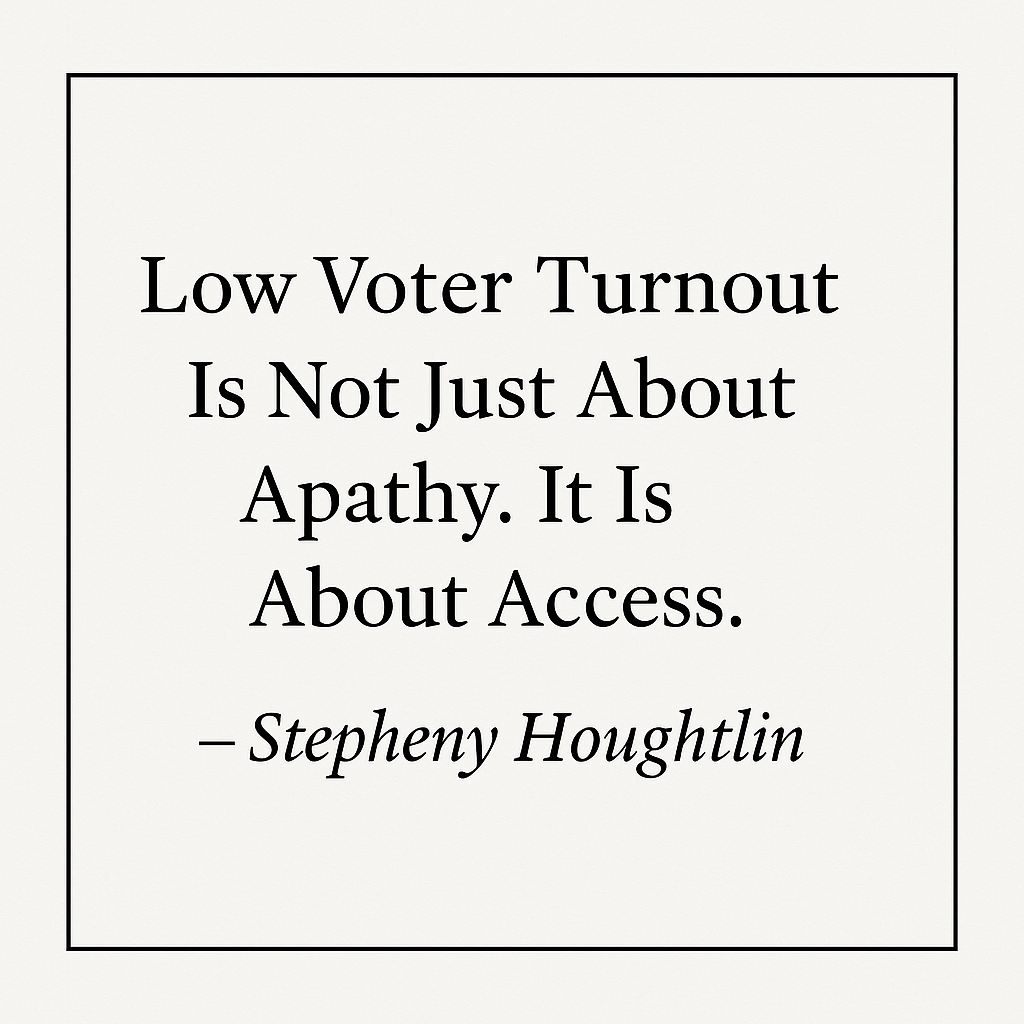
Looking at it this way, I realize low voter turnout is not just about apathy. It is about access. It is about who can afford to stay informed and who cannot.

A democracy that depends on digital communication cannot thrive when entire neighborhoods are effectively offline. The people who most need reliable, trustworthy information are often the ones priced out of receiving it.

Isn’t this another reason Rocky Mount remains caught in patterns that no longer serve us? When voters cannot easily follow city business, cannot hear from a range of voices, and cannot compare leadership on equal footing, the same suspects, and their agendas, prevail and the same outcomes turn into negative headlines.

The community pays a price far beyond the cost of internet service when leaders learn to beat the system at the expense of their constituents.

Access to information is a kind of oxygen for a community. Without it, turnout stays low, trust stays fragile, and our ability to move forward remains partial.

Claire asked me the right question. How do people receive their information, how do they stay connected or drift quietly to the margins? That answer is shaping Rocky Mount’s future.

I know this blog post hasn’t solved the access problem. But we can refuse to let confusion or disconnection be the final word. We must refuse to accept that whole neighborhoods should be left in the dark about the decisions shaping their lives.

Trust grows in the places where truth is spoken plainly, when a problem is named even if it cannot yet be fixed, when a community wants more than the status quo.

That is why naming all of our obstacles matters, including the one we rarely say aloud: the fear of speaking up. Rocky Mount, for far too long, has worried that raising hard truths will earn them the wrong label, or harm their business, or place them at odds with those who hold power.

That fear is its own form of disconnection.

But beneath all of that, I don’t believe black or white, rich or poor, want different things. We want safety. We want decent neighborhoods. We want opportunity for our families.

We know we are all children of God, loved and carried when we lose our way.

And because of that shared belief, we can do better. Naming what has gone wrong won’t erase the digital divide or undo the years behind us, but it proves something essential: things can change. And they must.

This post is dedicated to my daughter, Dr. Claire Greer, Ph.D., a Research Assistant Professor at the Center for Literacy and Disability Studies, in the Department of Allied Health Sciences, School of Medicine, University of North Carolina at Chapel Hill. She is a force in the world of education for special needs children, and most often, my champion when it comes to her support in the other passions of my life.

One thought on “How Are Rocky Mount Voters Getting Their Information?

  1. In certain Wards the residents receive most of their information from the pulpit. This is the reason that certain Council people have been in office for so long and nothing in the Ward changes.

    Like

Leave a comment