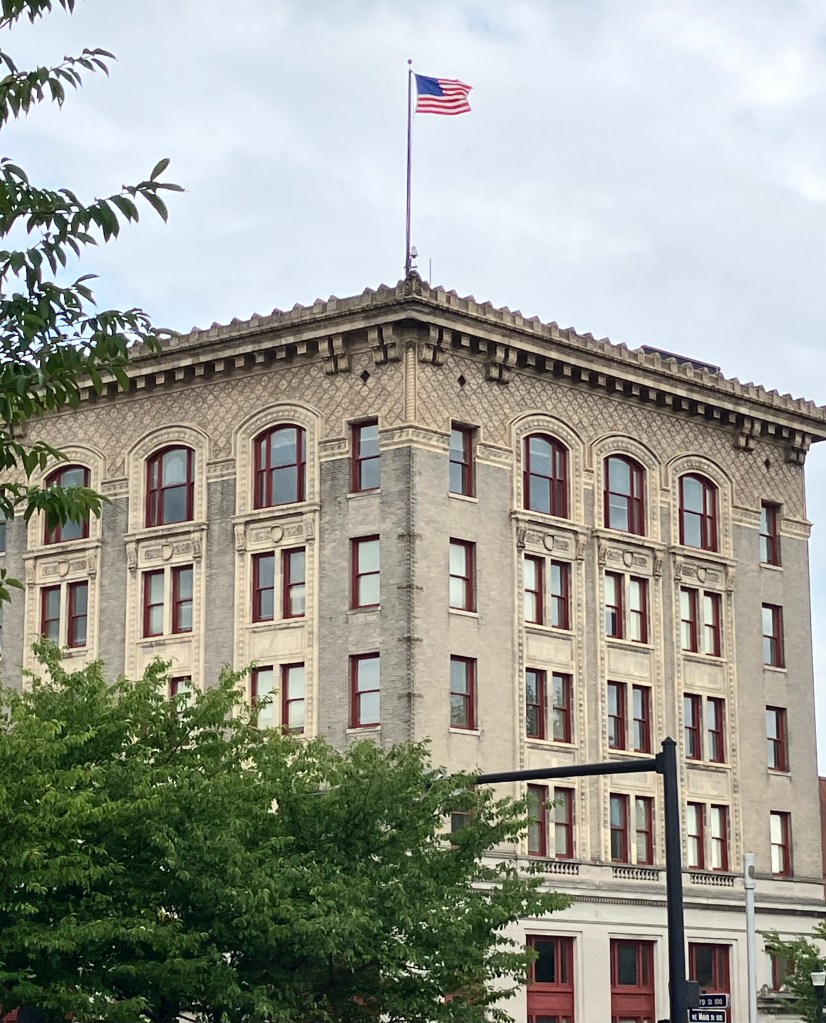
When I look up at the Rocky Mount National Bank, I don’t just see architecture. I see a standard that still asks something of us, about stewardship, pride, and whether we believe our Main Street is worth the same care today.
This Beaux Arts building was designed to do something specific. It was meant to inspire confidence before a word was spoken or a transaction made.
The symmetry, the ornamentation, the weight of the materials, all of it quietly communicated stability. You could trust what happened inside these walls. You could trust the future.
Beaux Arts architecture never whispered. It spoke clearly about order, permanence, and civic responsibility. Buildings like this were public statements. They told a town’s story in brick and stone.
They said, we are here to stay. And for decades, Main Street lived up to that promise.
Today, I find myself watching these buildings differently. Not with nostalgia alone, but with attentiveness. I notice what has endured and what has been neglected. I notice where care has been taken and where it has not.
Each detail, on its own, might seem small. Together, they form a picture that reflects how much we still value the heart of our city.
The flag atop this building matters. Not as decoration, but as a reminder of our love and pride in being Americans. For me, it also declares the ideals this architecture once embodied.
Confidence. Responsibility. A belief that public spaces deserved beauty and intention. These were not luxuries. They were foundations.
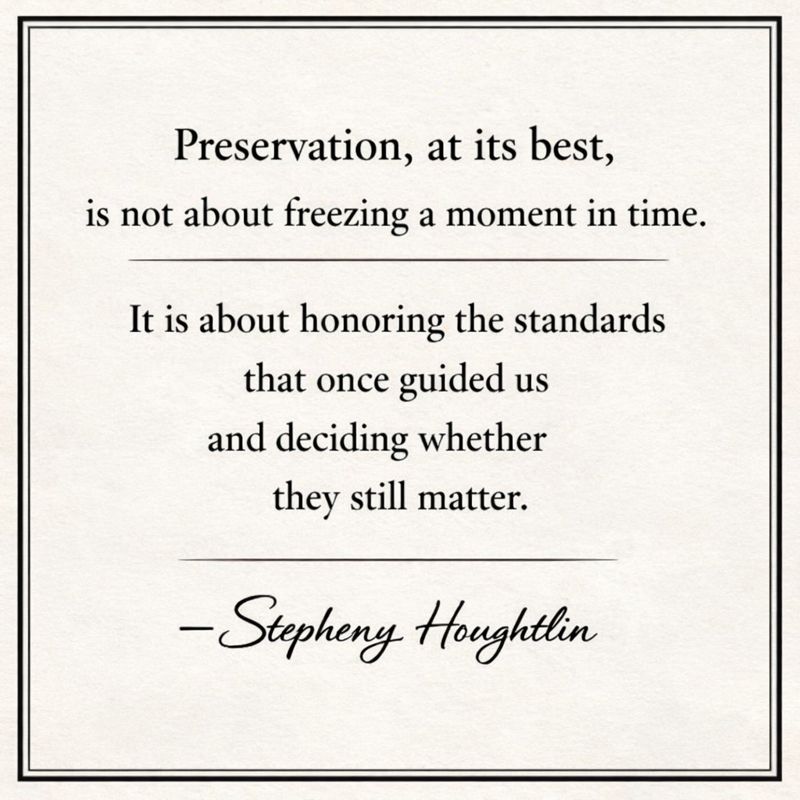
Preservation, at its best, is not about freezing a moment in time. It is about honoring the standards that once guided us and deciding whether they still matter.
When we restore, maintain, and repurpose buildings like this, we are not simply saving old structures. We are reaffirming a belief that our shared spaces are worth care, worth investment, worth respect.
I don’t look at the Rocky Mount National Bank and wish for the past to return. I look at it and ask what it still teaches us. About patience. About long views. About the quiet power of building something meant to last longer than we do.
Buildings like this don’t just belong to the past. They belong to all of us who walk beneath them now. They ask something quietly, not for admiration alone, but for attention and care.
This is my invitation to see Main Street in this New Year. To look up. To notice what has endured, what has been neglected, and what still holds expectations, even now. Watching this way doesn’t require expertise or agreement, only a willingness to pay attention.
If enough of us do that, stand still long enough to see clearly, Main Street begins to tell us what it needs. And perhaps, in the listening, we begin to understand our own role in what comes next.

 Main Street Rocky Mount