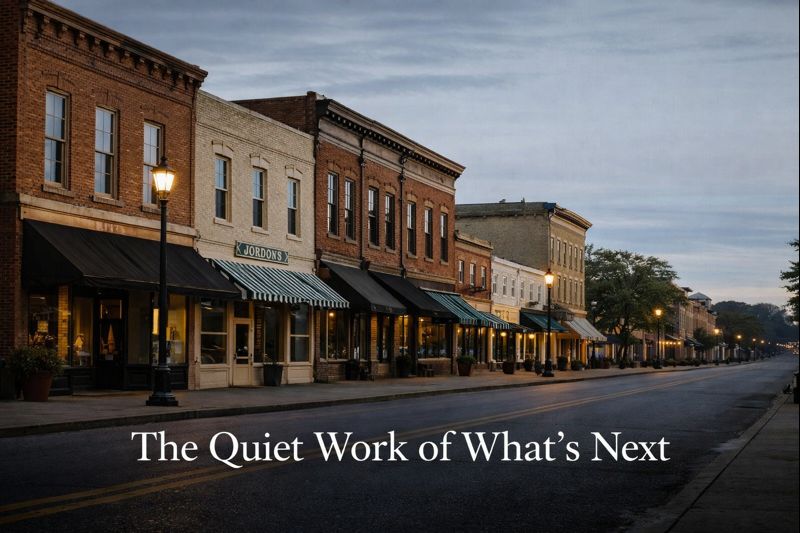
The New Year has a way of pressing a question upon us, whether we ask for it or not. After the holidays pass and the decorations come down, there is a pause, a moment when we ask, What’s next?
Sitting on my bench, looking down Main Street, I ask a version of that same question: What remains to be done?
That question has been shaped, in part, by a line from the poet T. S. Eliot. “For us,” he wrote, “there is only the trying.”
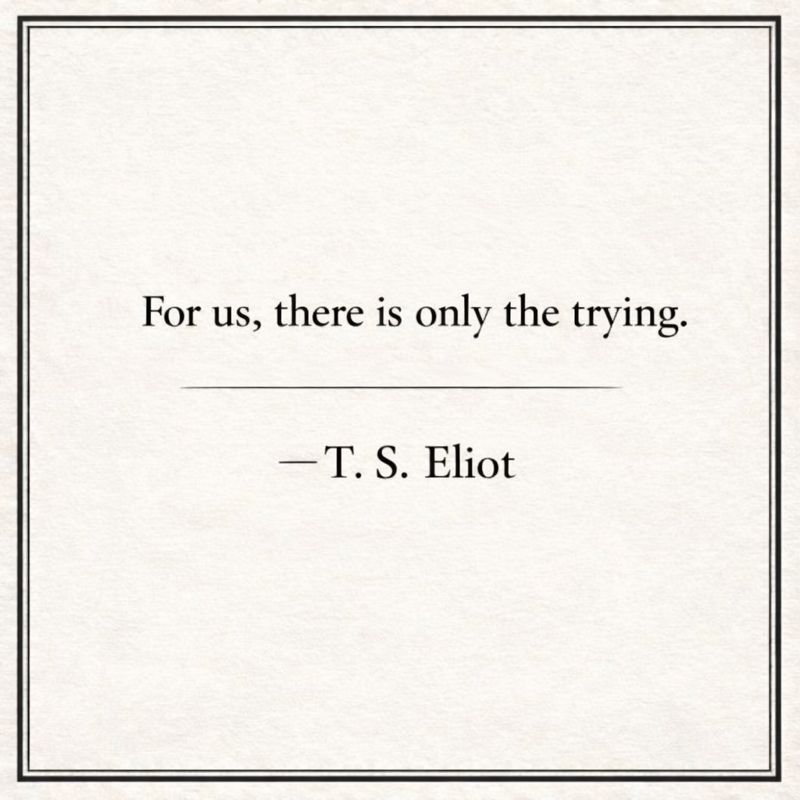
Eliot’s quotation says to me that responsibility lies in attention, effort, and faithfulness to what is directly in front of us.
It feels like the right way to enter a New Year, and the right way to look again at Main Street. Not asking whether everything has worked, but asking, seriously and without drama, what’s next, and whether we are willing to do the work that question requires.
When I ask myself what’s next for Main Street, I see what remains unfinished. Even as new businesses take root and familiar doors open again, long stretches of the street still feel on hold.
Empty or neglected facades, darkened windows, small signs of inattention, together they create a silence that is uncertain. This is the difference between a street that feels alive and one that is merely occupied.
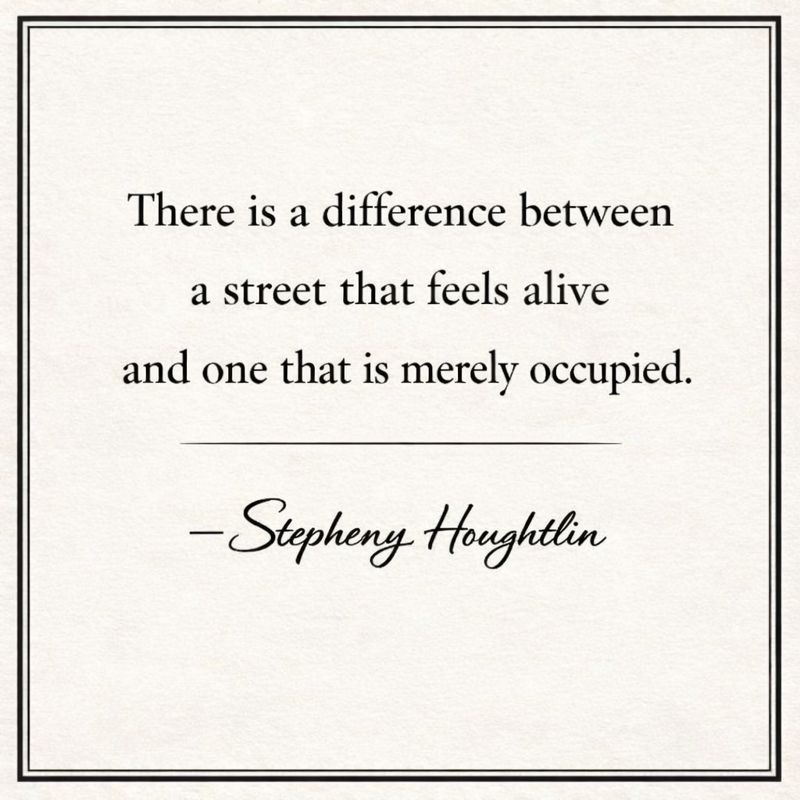
A living Main Street communicates care. It invites the eye to linger. It signals presence, even when the door is closed. An occupied street simply exists. The buildings are there, the addresses are filled, but there is little sense that anyone is tending to its spirit.
A window display, a clean pane of glass, a light left on after hours, none of these change a balance sheet. But together they shape how a place feels to those who walk it, drive past it, or decide whether it is worth returning to.
On a recent Sunday afternoon, a friend and I drove through Benson, North Carolina. There were no cars lining the street, no people on the sidewalks, nothing that announced a destination. And yet I asked if we could slow down.
What caught my eye were the storefronts. A small cluster of Main Street facades, quietly and tastefully done. Windows that had been considered. Simple gestures, containers of living greenery flanking a doorway, small signs that someone had been paying attention.
I wanted to stop. To take photographs. To linger over the small decisions that made the street feel alive rather than merely occupied.
That experience has stayed with me as I return to our own Main Street. It reminds me that what brings life to a place is the steady, often uncelebrated act of trying.
What’s next? is an important question, not only for Rocky Mount, but for our own lives as well. It asks us to consider what no longer serves us, what has grown ‘woody or unproductive,’ and what might benefit from careful pruning.
A good gardener knows that pruning creates space for light and air, for new growth to take hold.
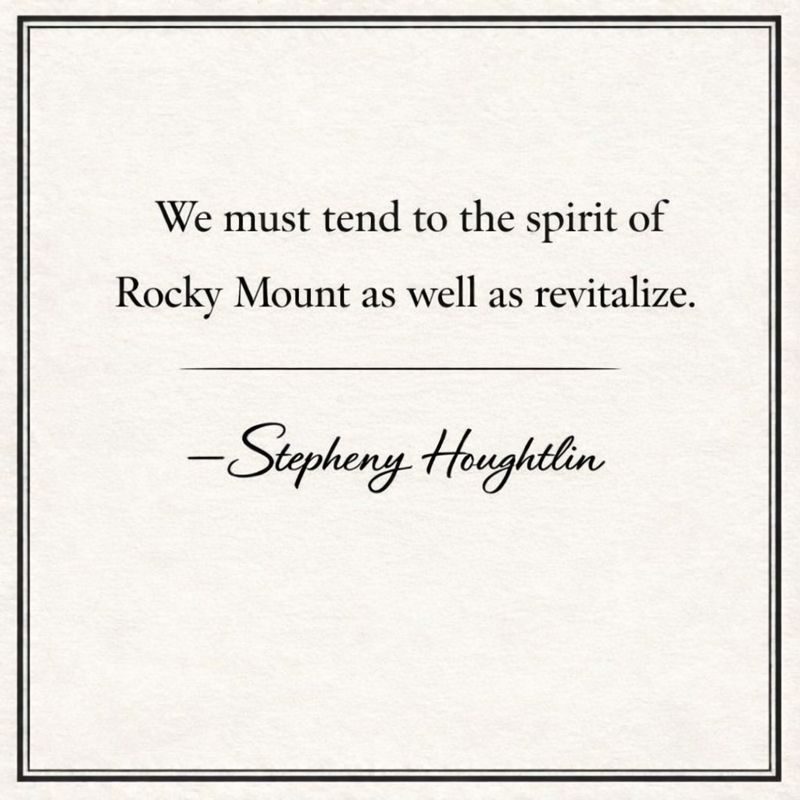
This is how I see the New Year beginning. With the willingness to tend to the spirit of Rocky Mount as well as its revitalization, and to keep trying.

 Main Street Rocky Mount